
When it comes to metal forming, manufacturers often face the critical decision of selecting the right stamping process for their parts. The choice between transfer and progressive stamping can significantly impact production efficiency, part quality, and overall costs. Understanding the differences, benefits, and limitations of each method is essential for anyone seeking to optimize their stamping operations. This article provides a clear, practical guide on how to choose between transfer and progressive stamping for your specific needs.
Both transfer and progressive stamping are widely used in industries such as automotive, appliance, and electronics manufacturing. However, the ideal process depends on factors like part complexity, production volume, material type, and desired tolerances. Early in your decision-making, it’s also valuable to review related topics, such as best practices for stamping coated steels, to ensure your entire workflow is optimized from start to finish.
Understanding Transfer and Progressive Stamping Methods
Before diving into the selection process, it’s important to clarify what sets these two stamping techniques apart. Both methods use dies and presses to shape metal, but they differ in how the material moves and how operations are performed.
Transfer Stamping: Process Overview
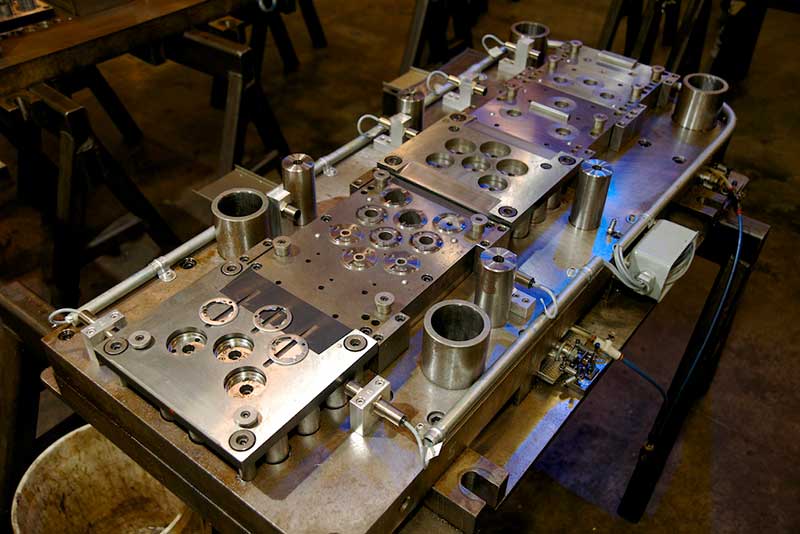
Transfer stamping involves moving a single blank or part from one station to the next using mechanical transfer fingers or automated arms. Each station in the die performs a specific operation, such as drawing, forming, or piercing. The part is separated from the strip at the start, allowing for more complex shapes and deeper draws. This method is often chosen for larger, three-dimensional parts or those requiring multiple forming steps that can’t be accomplished in a single progression.
Progressive Stamping: Process Overview
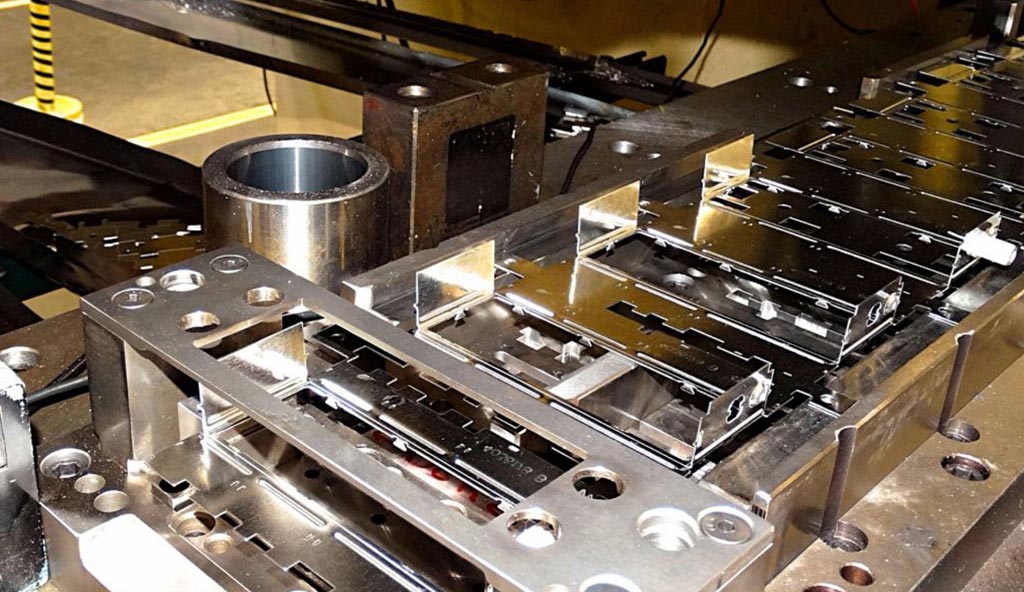
Progressive stamping feeds a continuous strip of metal through a series of stations within a single die. Each station performs a different operation, and the part remains attached to the strip until the final cut-off. This process is highly efficient for producing high volumes of smaller, simpler parts with tight tolerances. The continuous nature of the process minimizes handling and maximizes speed.
Key Factors in Deciding Between Transfer and Progressive Stamping
Choosing the right stamping process is not a one-size-fits-all decision. Here are the main considerations to help you determine the best approach for your project:
- Part Complexity: Transfer stamping excels with intricate, deep-drawn, or three-dimensional shapes. Progressive stamping is ideal for simpler, flat, or shallow parts.
- Production Volume: Progressive dies are designed for high-volume runs, offering fast cycle times and lower per-part costs at scale. Transfer dies are often used for medium to large parts in moderate volumes.
- Material Utilization: Progressive stamping typically results in less material waste due to efficient strip layout. Transfer stamping may produce more scrap, especially for irregular shapes.
- Tooling Investment: Progressive dies can be more expensive to design and build due to their complexity, but they pay off in high-volume production. Transfer dies may have lower initial costs for certain part types.
- Secondary Operations: If your part requires additional operations like tapping, assembly, or insertion, transfer stamping can more easily accommodate these steps within the die.
- Tolerances and Quality: Both methods can achieve high quality, but progressive stamping is often preferred for parts requiring consistent, tight tolerances.
For further technical guidance, you may also want to explore steel stamping edge quality optimization to ensure your chosen process meets your dimensional and finish requirements.
Advantages and Limitations of Each Stamping Process
Benefits of Transfer Stamping
- Handles complex geometries and deep draws
- Accommodates larger part sizes
- Allows for multiple, varied operations in one setup
- Can integrate secondary processes like welding or assembly
Drawbacks of Transfer Stamping
- Slower cycle times compared to progressive stamping
- Potentially higher labor and handling costs
- More material waste for certain part layouts
Benefits of Progressive Stamping
- High-speed production for large quantities
- Excellent material utilization and minimal scrap
- Consistent quality and tight tolerances
- Lower per-part cost at scale
Drawbacks of Progressive Stamping
- Limited to simpler, smaller parts
- Less flexibility for secondary operations within the die
- Higher initial tooling investment
How to Evaluate Your Project Needs
To make an informed decision on how to choose between transfer and progressive stamping, start by gathering detailed information about your part and production goals. Consider the following steps:
- Analyze your part drawings and specifications. Identify features such as holes, bends, embosses, and depths.
- Estimate your annual production volume and batch sizes.
- Assess material type and thickness, as some alloys may be better suited to one process over the other.
- Determine if any secondary operations are required, such as threading or assembly.
- Consult with experienced tool and die engineers to review manufacturability and cost implications.
For parts where dimensional accuracy is critical, reviewing how to maintain consistent part dimensions can help you align your process choice with your quality standards.
Cost Considerations and Production Efficiency
Cost is always a key factor when selecting a stamping process. Progressive stamping generally offers lower per-part costs for high-volume runs due to its speed and efficiency. However, the upfront investment in tooling can be significant. Transfer stamping may be more cost-effective for lower to medium volumes or for parts that would require multiple progressive dies to achieve the same result.
When comparing costs, account for:
- Tooling design and build expenses
- Material utilization and scrap rates
- Labor and handling requirements
- Maintenance and die life
- Potential for automation and integration with other processes
For operations where workplace safety and environmental factors are a concern, review metal stamping safety best practices to ensure your process aligns with industry standards.
Common Applications for Each Stamping Method
Understanding where each process shines can further clarify your selection:
- Transfer stamping is often used for automotive structural parts, appliance housings, and large brackets.
- Progressive stamping is favored for electrical connectors, clips, fasteners, and small precision components.
Some projects may even combine both methods, using transfer stamping for initial forming and progressive dies for finishing operations. The right approach depends on your unique requirements and production goals.
FAQ: Choosing the Right Metal Stamping Process
What are the main differences between transfer and progressive stamping?
Transfer stamping moves individual blanks through multiple die stations, making it suitable for complex, deep-drawn, or large parts. Progressive stamping feeds a continuous strip through a series of stations, producing high volumes of smaller, simpler parts efficiently.
How do I determine which process is more cost-effective?
Evaluate your part’s complexity, production volume, and required tolerances. Progressive stamping is generally more cost-effective for high-volume, simple parts, while transfer stamping is better for complex or lower-volume projects. Always factor in tooling costs, material usage, and labor.
Can both methods achieve high-quality, consistent parts?
Yes, both processes can deliver high-quality results when properly engineered. Progressive stamping is often chosen for its consistency and tight tolerances, while transfer stamping offers flexibility for complex geometries and integrated operations.
Conclusion
Deciding how to choose between transfer and progressive stamping requires a careful assessment of your part design, production needs, and cost considerations. By understanding the strengths and limitations of each process, you can select the method that delivers the best balance of quality, efficiency, and value for your manufacturing operation. For further insights on optimizing your stamping workflow, consider exploring topics like steel stamping noise reduction strategies and understanding the limits of steel formability to ensure your process delivers consistent, high-quality results.