
Controlling coil curvature is a fundamental challenge in steel stamping. The natural tendency of coiled steel to retain its curved shape can lead to defects, misfeeds, and dimensional inaccuracies in finished parts. Understanding how to manage coil curvature in stamping is essential for maintaining high-quality production and minimizing scrap rates.
This article explores practical methods for addressing coil set, flattening strip material, and optimizing your stamping line to reduce the impact of unwanted curvature. Whether you’re working with automotive components, appliance parts, or precision electronics, the right approach to coil handling can make a significant difference in both efficiency and product quality.
For those interested in related process optimizations, you may also benefit from reviewing how to optimize scrap chute angles for improved scrap management in steel stamping environments.
Understanding Coil Set and Its Impact on Stamping
Coil set refers to the residual curvature that remains in steel strip after it has been uncoiled. This curvature can cause problems such as:
- Difficulty feeding material into dies
- Misalignment of stamped features
- Inconsistent part flatness
- Increased tool wear and potential for jams
Left unaddressed, coil set can undermine even the most precisely engineered stamping operations. It’s important to recognize that the severity of coil curvature depends on factors like material thickness, coil diameter, yield strength, and the time the steel has spent in coil form.
Key Strategies for Flattening Coil Material
Effectively managing coil curvature in stamping starts with flattening the strip before it enters the die. Several proven methods are used in the industry:
1. Precision Straighteners
Straighteners use a series of staggered rollers to bend the strip alternately up and down, gradually removing the curvature. The number of rollers and their adjustment are critical for optimal results. For high-strength or thick materials, heavy-duty straighteners with more rollers and greater force may be required.
2. Levelers for Enhanced Flatness
Levelers go beyond simple straightening by correcting both coil set and crossbow (side-to-side curvature). These machines apply small, repeated bends to the strip, producing material that is flat and stress-relieved. Levelers are especially important for applications demanding tight tolerances and cosmetic finishes.
3. Proper Material Handling
How you handle and store coils can affect the degree of curvature. Avoid leaving coils under tension for extended periods, and always support them properly during transport and loading. Using powered uncoilers with tension control can help reduce the initial set as the strip is fed into the line.
Optimizing Stamping Line Setup for Curved Coil Stock
Even with the best straightening equipment, some residual curvature may persist. Stamping line setup plays a crucial role in accommodating and minimizing these effects:
- Die Entry Guides: Use entry guides to ensure the strip enters the die squarely, compensating for minor curvature.
- Feed System Tuning: Adjust feed rollers and sensors to handle slight up/down movement of the strip.
- Progressive Die Design: Incorporate features that allow for slight material springback, especially in multi-stage operations.
- Regular Maintenance: Keep straighteners, levelers, and feed systems clean and properly adjusted to maintain consistent performance.
For more on material properties that influence stamping quality, see our guide on steel stamping material yield strength considerations.
Material Selection and Its Role in Coil Curvature
The type of steel and its mechanical properties have a direct impact on how much coil set will be present and how easily it can be removed. Softer, low-carbon steels are generally easier to flatten, while high-strength alloys may require more robust straightening equipment and careful process control.
Additionally, the width-to-thickness ratio of the strip affects its tendency to retain curvature. Narrow, thin strips are more prone to coil set and may need extra attention during setup and processing.
Quality Control and Inspection Practices
Maintaining part quality requires ongoing inspection of both incoming coil stock and finished components. Recommended practices include:
- Regularly checking strip flatness with straight edges or laser measurement systems
- Monitoring die wear and alignment to catch issues caused by excessive curvature
- Documenting coil lot numbers and flattening parameters for traceability
For more advanced tips on protecting surfaces during forming, explore best practices for stamping coated steels without causing damage.
Best Practices for Safe and Efficient Coil Handling
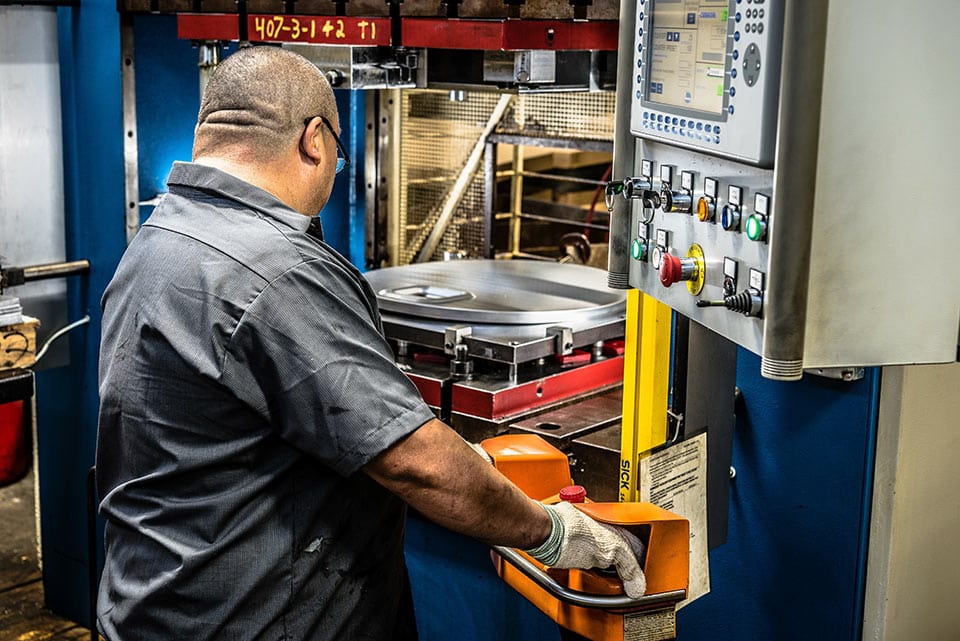
Proper coil handling is not only important for minimizing curvature but also for ensuring operator safety and equipment longevity. Some recommended practices include:
- Training staff on safe coil loading and uncoiling procedures
- Using appropriate lifting equipment to prevent coil damage
- Implementing lockout/tagout protocols during maintenance
- Maintaining clear communication between operators and setup personnel
For a deeper look at safety in precision metal forming, see these safe practices for precision metal stamping.
Continuous Improvement and Troubleshooting
Managing coil set is an ongoing process. Regular review of production data, feedback from operators, and analysis of part quality can reveal opportunities for further improvement. Consider the following steps:
- Track scrap rates and identify root causes related to coil curvature
- Experiment with straightener and leveler settings to find optimal parameters
- Collaborate with material suppliers to specify coil dimensions that minimize set
- Stay updated on new equipment and automation solutions for coil processing
For additional insights into material characteristics and their effect on stamping, read about the importance of material grain size in steel stamping quality.
Frequently Asked Questions
What causes coil set in steel stamping operations?
Coil set is primarily caused by the plastic deformation of steel as it is wound into a coil at the mill. The longer the material remains coiled and the tighter the coil, the more pronounced the curvature will be when uncoiled for stamping.
How can I reduce coil curvature before stamping?
The most effective way is to use a precision straightener or leveler to gradually remove the set. Proper storage, handling, and timely processing of coils also help minimize residual curvature.
Does coil curvature affect part quality?
Yes, excessive curvature can lead to misfeeds, poor dimensional accuracy, and increased scrap. It may also cause uneven wear on dies and feeding equipment, impacting both quality and productivity.
Are there material types that are easier to flatten?
Low-carbon, softer steels are generally easier to flatten than high-strength or alloyed steels. However, the right equipment and process adjustments can effectively manage curvature in most materials.
Can coil set be completely eliminated?
While it is difficult to remove all curvature, especially in high-strength or thick materials, modern straightening and leveling equipment can reduce coil set to levels that do not impact stamping quality or downstream processes.