
Understanding the differences between hydraulic and mechanical stamping presses is essential for manufacturers, engineers, and anyone involved in metal forming. These two types of presses are widely used in the metalworking industry, but each operates with distinct mechanisms, offers unique advantages, and is better suited for specific applications. Choosing the right press can impact productivity, part quality, and operational costs.
In this article, we’ll break down how hydraulic and mechanical presses work, compare their strengths and limitations, and help you determine which might be the best fit for your stamping needs. If you’re interested in optimizing your stamping process, you may also want to explore related topics such as steel stamping lubrication application methods to further enhance efficiency and tool life.
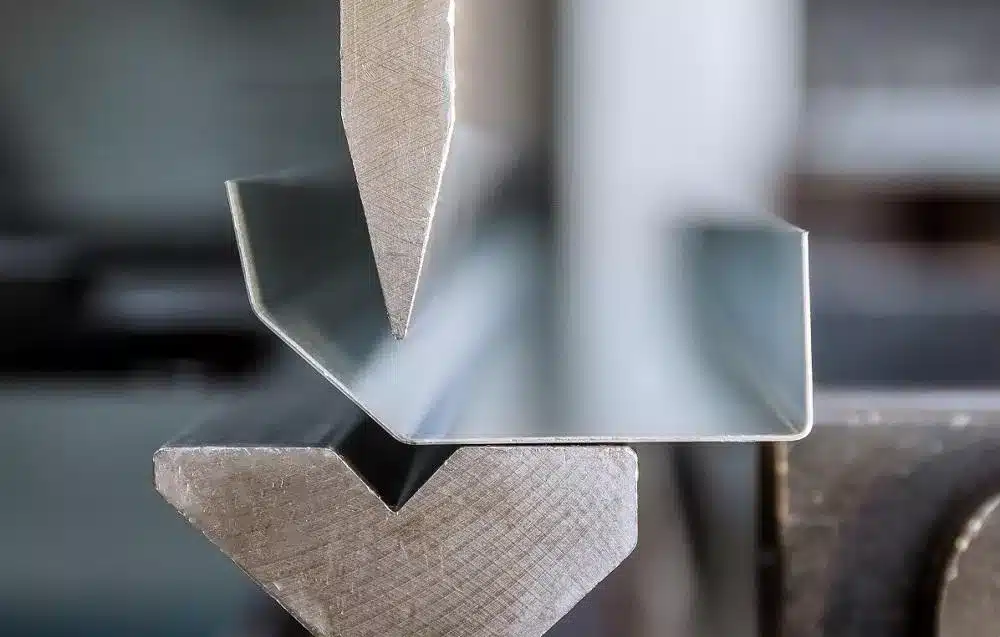
How Hydraulic and Mechanical Presses Operate
The core distinction between these two press types lies in their drive systems. Hydraulic presses use fluid power to generate force, while mechanical presses rely on mechanical linkages and flywheels.
Hydraulic Stamping Presses: Fluid Power in Action
Hydraulic presses operate by pumping hydraulic fluid into a cylinder, which pushes a piston and generates force. This setup allows for precise control over the ram’s speed, pressure, and position throughout the entire stroke. Operators can easily adjust force and speed for different materials and part geometries.
- Variable force and speed: Easily adjustable for a wide range of tasks.
- Full tonnage at any point: Delivers maximum force throughout the stroke, including at the bottom dead center.
- Ideal for deep drawing and complex shapes: Consistent pressure is beneficial for forming intricate parts.
Mechanical Stamping Presses: Speed and Efficiency
Mechanical presses use a motor-driven flywheel that stores rotational energy. This energy is transferred to the ram via a crankshaft or eccentric mechanism. The force profile is highest near the bottom of the stroke, making these presses especially effective for high-speed blanking, punching, and shallow forming operations.
- High production rates: Capable of rapid cycling, making them suitable for mass production.
- Consistent stroke speed: Ram speed is fixed and follows a set curve, which can limit flexibility for certain operations.
- Best for simple, shallow parts: Most efficient for operations that don’t require variable force or deep drawing.
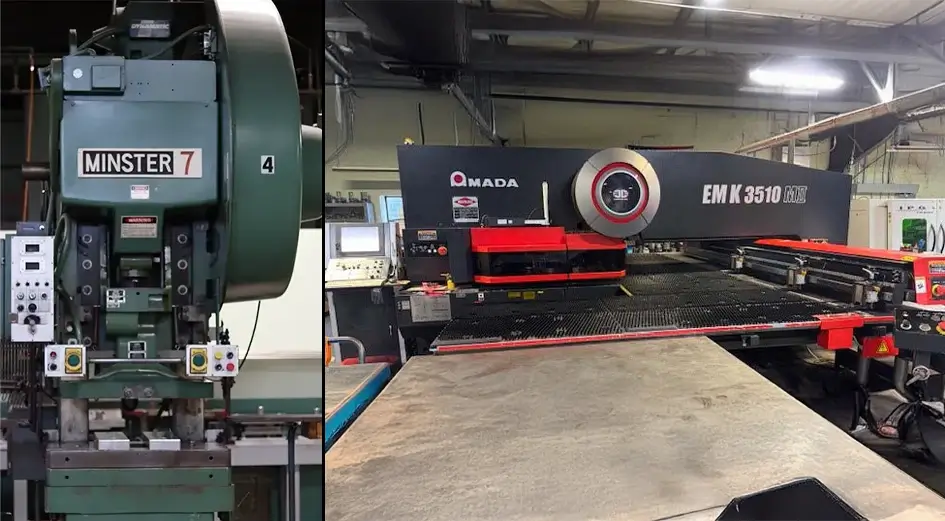
Comparing Performance: Force, Speed, and Flexibility
When evaluating the differences between hydraulic and mechanical stamping presses, it’s important to consider how each type performs in key operational areas.
Force Delivery and Control
Hydraulic presses offer full tonnage throughout the stroke, providing uniform pressure for forming, drawing, and coining. This makes them well-suited for parts requiring deep or complex shapes. Mechanical presses, in contrast, deliver peak force only near the bottom of the stroke. This is ideal for blanking and shallow forming but can be limiting for more intricate operations.
Production Speed and Cycle Time
Mechanical presses excel in speed, often achieving 30–100+ strokes per minute, which is advantageous for high-volume production. Hydraulic presses typically operate at slower speeds, usually 10–30 strokes per minute, due to the nature of fluid movement and pressure buildup. However, their slower cycle can be offset by their versatility and ability to handle a wider range of part geometries.
Flexibility and Setup
Hydraulic presses are highly adaptable, allowing operators to fine-tune pressure, speed, and stroke length for each job. This flexibility reduces setup time and enables quick changeovers. Mechanical presses, while fast, are less flexible; changing stroke length or force often requires mechanical adjustments or different tooling.
Maintenance, Safety, and Cost Considerations
Beyond performance, operational costs and safety are critical factors when choosing between hydraulic and mechanical presses.
Maintenance Requirements
Hydraulic presses require regular monitoring of fluid levels, seals, and hoses to prevent leaks and maintain consistent performance. Mechanical presses, on the other hand, need periodic lubrication and inspection of moving parts such as bearings, gears, and flywheels. Both types benefit from routine preventive maintenance to maximize uptime and equipment life.
Safety Features
Modern hydraulic presses often come equipped with advanced safety systems, including overload protection and programmable controls. Mechanical presses are also designed with safety in mind, but their rapid cycling and high inertia can increase the risk of accidents if not properly guarded. For a deeper look at safety best practices, refer to this comprehensive guide to safety precautions for metal stamping machinery.
Cost and Energy Efficiency
Mechanical presses generally have a lower initial purchase price and can be more energy-efficient during high-speed production runs. Hydraulic presses may cost more upfront and consume more energy per cycle, especially at higher tonnages. However, their versatility can reduce tooling costs and setup times for low- to medium-volume jobs.
Choosing the Right Press for Your Application
Selecting between hydraulic and mechanical presses depends on several factors, including part complexity, production volume, material type, and budget. Here’s a quick comparison to help guide your decision:
| Feature | Hydraulic Press | Mechanical Press |
|---|---|---|
| Force Control | Variable, full tonnage throughout stroke | Peak force at bottom of stroke |
| Speed | Slower, adjustable | High, fixed |
| Best For | Deep drawing, complex shapes | Blanking, shallow forming |
| Setup Flexibility | High | Low to moderate |
| Maintenance | Hydraulic fluid, seals | Bearings, gears |
| Cost | Higher upfront, lower tooling | Lower upfront, higher tooling |
For operations requiring high-speed production of simple parts, mechanical presses are often the preferred choice. If your work involves deep drawing, forming intricate geometries, or frequent changeovers, hydraulic presses offer the flexibility and control needed to achieve consistent results.
Additionally, consider how supporting processes—such as steel stamping cooling methods—can further optimize press performance and tool longevity.
Frequently Asked Questions
What are the main advantages of hydraulic stamping presses?
Hydraulic presses provide full tonnage throughout the stroke, allowing for precise control over force and speed. This makes them ideal for forming complex or deep-drawn parts. They are also highly adaptable, enabling quick changeovers and adjustments for different jobs.
When should I choose a mechanical stamping press?
Mechanical presses are best suited for high-volume production of simple, shallow parts. Their fast cycle times and energy efficiency make them a cost-effective choice for blanking, punching, and other repetitive operations where speed is a priority.
How do maintenance requirements differ between hydraulic and mechanical presses?
Hydraulic presses require regular checks of fluid levels, hoses, and seals to prevent leaks and maintain consistent pressure. Mechanical presses need periodic lubrication and inspection of moving parts such as gears and bearings. Both types benefit from a proactive maintenance schedule to ensure safe and reliable operation.
Are there environmental considerations when choosing a press?
Yes. Hydraulic presses may pose environmental risks if hydraulic fluid leaks occur, while mechanical presses can be more energy-efficient for high-speed production. For more on sustainability, see our article on the environmental impact of steel stamping processes.
Understanding the differences between hydraulic and mechanical stamping presses will help you select the right equipment for your production needs, ensuring safety, efficiency, and quality in your metal forming operations.