
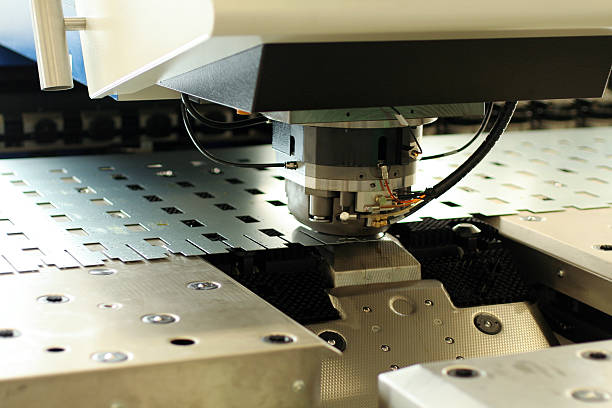
The what is steel stamping process question is central to understanding how countless everyday products are manufactured. Steel stamping is a core technique in the metal fabrication industry, enabling the mass production of precise, durable parts for sectors like automotive, electronics, construction, and appliances. This article explores the fundamentals of steel stamping, its main steps, the equipment involved, and key considerations for manufacturers and buyers.
As industries move toward more sustainable and efficient production, methods like steel stamping play a vital role in shaping the future of manufacturing. For readers interested in the environmental side of metalworking, you might also find insights in our overview of metal fabrication environmental trends and how they are influencing modern processes.
Understanding the Steel Stamping Process
Steel stamping, sometimes called metal pressing, is a manufacturing process that uses dies and high-pressure presses to shape flat sheets of steel into specific forms. This technique is widely used to produce components with tight tolerances, complex geometries, and high repeatability. The process can involve a single operation or a series of steps, such as blanking, punching, bending, embossing, and coining.
The steel stamping process offers several advantages: it is cost-effective for high-volume production, delivers consistent quality, and allows for intricate designs that would be difficult or expensive to achieve with other methods. Parts made through stamping are commonly found in car bodies, electronic enclosures, brackets, and more.
Key Steps in Modern Steel Stamping
The journey from raw steel sheet to finished part typically involves several stages. Here is a breakdown of the main steps:
- Design and Tooling: Engineers create detailed drawings and specifications for the part. Custom dies are then manufactured to match these requirements.
- Material Preparation: Steel sheets or coils are selected based on thickness, grade, and surface finish. The material is cleaned and cut to size as needed.
- Stamping Operations: The prepared steel is fed into a stamping press, where the die shapes it through one or more actions. Common operations include:
- Blanking – cutting out the basic shape
- Punching – creating holes or cutouts
- Bending – forming angles or curves
- Embossing – raising or recessing areas for strength or aesthetics
- Coining – refining edges or adding fine details
- Finishing: After stamping, parts may undergo deburring, cleaning, plating, painting, or heat treatment to enhance performance or appearance.
- Inspection and Quality Control: Each part is checked for dimensional accuracy, surface quality, and structural integrity before shipment.
Types of Steel Stamping Techniques
There are several approaches to stamping, each suited to different applications and production volumes:
- Progressive Die Stamping: The steel strip moves through a series of stations, each performing a specific operation. This method is ideal for high-volume, complex parts.
- Transfer Die Stamping: Individual parts are transferred between stations, allowing for larger or more intricate components.
- Deep Drawing: Used to form deep, hollow shapes such as cans or enclosures by stretching the steel into a die cavity.
- Fine Blanking: A precision process for producing smooth-edged, high-tolerance parts, often used in automotive and electronics industries.
Equipment Used in Steel Stamping
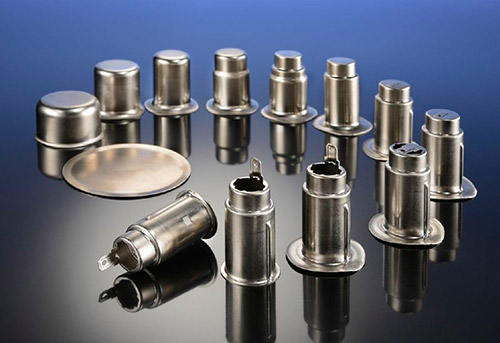
The heart of any stamping operation is the press, which can be mechanical or hydraulic. Mechanical presses are fast and suitable for thinner materials, while hydraulic presses offer greater control for thicker or more complex parts. Dies, made from hardened tool steel, are custom-designed for each project and can be single-stage or multi-stage.
Ancillary equipment includes feeders, straighteners, and coil handling systems to ensure smooth, continuous operation. Automation is increasingly common, improving efficiency and reducing labor costs.
Benefits and Challenges of Steel Stamping
The steel stamping process brings many benefits to manufacturers:
- High production speed for large quantities
- Excellent repeatability and accuracy
- Ability to create complex shapes and fine details
- Lower per-part cost at scale
- Compatibility with a wide range of steel grades and thicknesses
However, there are also challenges. Tooling costs can be significant, especially for custom or low-volume parts. Material waste and energy use are concerns, particularly as sustainability becomes a priority. For more on these issues, see our article on challenges of sustainable metal fabrication and potential solutions.
Safety Considerations in Steel Stamping Operations
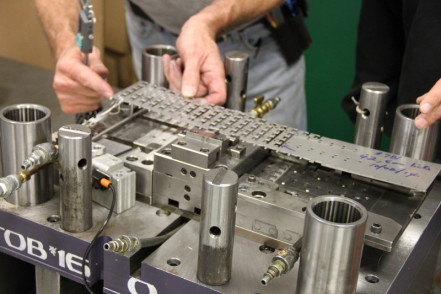
Working with high-force presses and sharp dies presents safety risks. Operators must follow strict protocols, including the use of guards, emergency stops, and personal protective equipment. Regular maintenance and training are essential to prevent accidents and ensure reliable production.
For a comprehensive overview of best practices, refer to this guide to safety precautions when operating metal stamping machinery.
Applications and Future Trends in Steel Stamping
Stamped steel parts are found in a broad range of products, from car frames and engine components to consumer electronics and medical devices. As industries demand lighter, stronger, and more sustainable materials, the process continues to evolve. Innovations in die design, automation, and material science are making stamping more efficient and environmentally friendly.
If you are interested in how sustainability is shaping the sector, explore our article on future of sustainable metal fabrication for a look at upcoming trends and technologies.
Frequently Asked Questions
What materials can be used in the steel stamping process?
While steel is the most common, the stamping process can also be applied to other metals such as aluminum, copper, brass, and stainless steel. The choice of material depends on the part’s intended use, required strength, and environmental considerations.
How does steel stamping differ from other metal forming methods?
Steel stamping uses dies and presses to shape flat sheets, whereas other methods like casting or forging involve melting or deforming metal in different ways. Stamping is typically faster and more cost-effective for high-volume, precision parts.
What are the main factors affecting the cost of stamped steel parts?
The primary cost drivers include the complexity of the part, the type and thickness of steel, the number of stamping operations required, and tooling expenses. High-volume runs usually reduce the per-unit cost, while custom or intricate designs may increase it.
Is steel stamping environmentally friendly?
The environmental impact depends on factors such as material efficiency, energy use, and waste management. Advances in recycling, die design, and process optimization are helping to make stamping more sustainable. For further reading, see our coverage of eco friendly fabrication cost benefits for businesses.